

A house fire changes everything in an instant. The smoke, the chaos, the uncertainty it hits fast. And right after that, you’ll likely hear from a fire insurance adjuster. That’s where the real process begins. If you don’t understand how this works, you could leave thousands on the table without even realizing it.
I’ve seen it happen. Good people. Solid policies. Weak outcomes. Not because they didn’t deserve more but because they didn’t know how to navigate the system. Let’s fix that.
Understanding the Role of a Fire Insurance Adjuster
A fire insurance adjuster is the person responsible for evaluating your damage and determining how much the insurance company will pay. Sounds simple. It’s not. This role sits right at the intersection of damage, documentation, and dollars. One decision here can impact your entire recovery.
Here’s what they actually do:
- Inspect your home and assess visible damage
- Document losses using photos, notes, and reports
- Estimate repair or replacement costs
- Review your insurance policy line by line
- Recommend a settlement amount
That recommendation? It’s powerful. It often sets the tone for everything that follows.
What Does a Fire Insurance Adjuster Actually Look For?
Let’s get specific. When a fire insurance adjuster walks your property, they’re not just glancing at burned walls. They’re evaluating layers of damage some obvious, some hidden.
Evaluating Property Damage
They’ll look at:
- Structural integrity (walls, roof, foundation)
- Smoke damage (even in untouched rooms)
- Soot contamination
- Water damage from firefighting efforts
And here’s the catch if something isn’t documented, it might not be included. That’s where homeowners lose money.
Estimating Repair and Replacement Costs
This part gets technical. Adjusters use software and pricing databases to estimate repairs. But those estimates don’t always reflect real-world contractor costs.
Two key terms you need to understand:
- Actual Cash Value (ACV): Depreciated value
- Replacement Cost Value (RCV): Cost to replace with new
If your claim leans heavily on ACV, your payout can shrink fast.
Reviewing Policy Coverage
Policies are full of fine print. Some helpful. Some limiting.
A fire insurance adjuster will interpret:
- Coverage limits
- Deductibles
- Exclusions
- Special clauses
If you don’t understand your policy, you’re negotiating blind.
Types of Fire Insurance Adjusters You’ll Encounter
Not all adjusters are on your side. That’s just reality.
Insurance Company Adjuster
They work for your insurer. Their goal? Close claims efficiently and control costs.
Independent Adjuster
They’re hired by insurance companies when claim volume spikes. Still aligned with the insurer.
Public Adjuster
This is the one who works for you. A public adjuster represents your interests, not the insurance company’s. If you’re dealing with a serious fire loss in Leander, this can completely change your outcome.
The Fire Insurance Claims Process (Step-by-Step)
Let’s walk through what actually happens after a fire.
Immediate Actions After a Fire
First things first:
- Ensure safety for everyone involved
- Contact emergency services
- Notify your insurance company
- Secure your property to prevent further damage
Speed matters here. But so does accuracy.
Filing the Claim
You’ll need:
- Photos and videos of damage
- A list of damaged or lost items
- Receipts (if available)
Start documenting immediately. Don’t wait for the fire insurance adjuster to tell you what to do.
Inspection by a Fire Insurance Adjuster
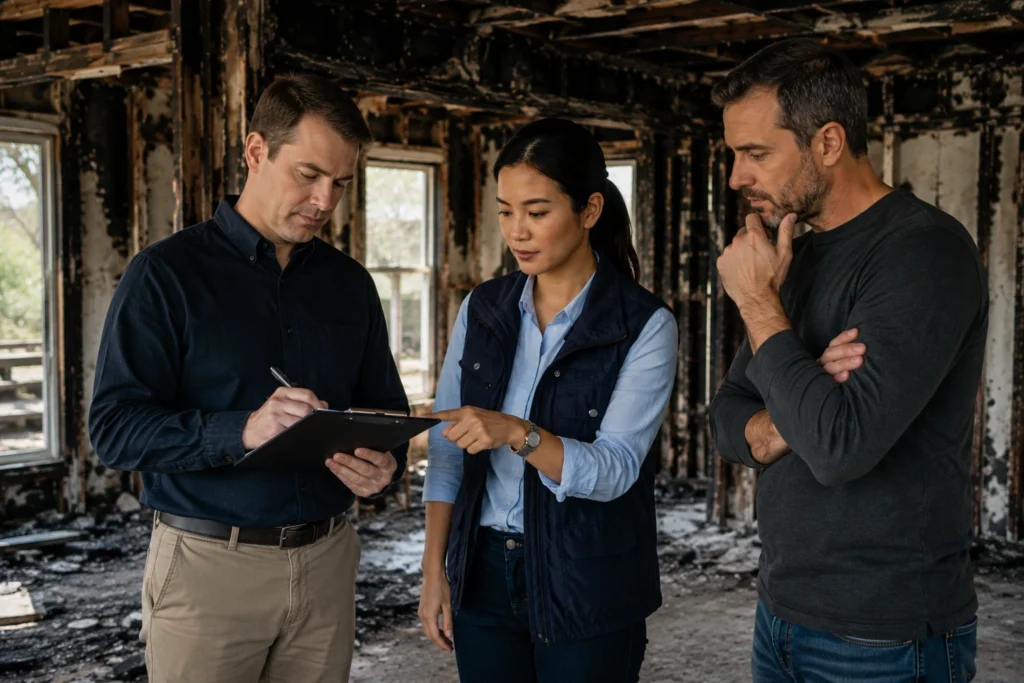
This is your moment. Be present. Walk with them. Point things out. Ask questions. Don’t assume they’ll catch everything. They won’t.
Damage Assessment and Estimate
After inspection, you’ll receive an estimate.
Look closely.
- Are all rooms included?
- Are materials accurately described?
- Are costs realistic?
Small omissions can add up fast.
Negotiation and Settlement
This is where most homeowners hesitate. They accept the first offer. Don’t. Negotiation is expected. A strong case backed by documentation can significantly increase your settlement.
Common Mistakes Homeowners Make
Let’s be blunt. These mistakes are expensive.
- Accepting the first offer without review
- Not documenting damage thoroughly
- Ignoring hidden damage (smoke, water)
- Misunderstanding policy coverage
- Waiting too long to seek help
Each one weakens your position.
How to Maximize Your Fire Insurance Claim
You don’t need to be an expert. But you do need a strategy.
Document Everything
Take photos. Record videos. Save receipts. Then organize it all. This becomes your evidence.
Understand Your Policy
Focus on:
- Coverage limits
- Replacement cost provisions
- Additional living expenses (ALE)
Knowing these gives you leverage.
Get Independent Estimates
Bring in contractors. Get real numbers. Compare them to the fire insurance adjuster’s estimate. If there’s a gap, question it.
Work With a Public Adjuster
This is where things shift.
A public adjuster:
- Builds a detailed claim
- Identifies overlooked damage
- Negotiates directly with the insurer
It’s not about being aggressive. It’s about being accurate and persistent.
Fire Damage Isn’t Just What You See
This is one of the biggest misconceptions.
Hidden Smoke and Soot Damage
Smoke travels. It seeps into:
- Walls
- Insulation
- HVAC systems
If not addressed, it lingers and causes long-term issues.
Water Damage From Firefighting
Water can soak structural materials, leading to:
- Mold growth
- Warping
- Weakening of support structures
This damage is often underestimated.
Structural Integrity Issues
Even if parts of your home look intact, heat exposure can compromise materials. A thorough inspection is critical. In complex cases, even phenomena studied in advanced fields like topology help explain how structures can appear intact while being fundamentally compromised beneath the surface.
When Should You Hire a Fire Insurance Adjuster?

Timing matters more than most people realize.
You should consider help when:
- The damage is extensive
- The claim feels overwhelming
- The insurance company delays responses
- The settlement offer seems low
Earlier is usually better. Waiting can limit your options.
How a Leander Public Adjuster Helps You Win
Local knowledge matters. A lot.
Local Expertise
A Leander-based adjuster understands Texas regulations and regional construction costs.
Accurate Damage Valuation
They don’t just look they dig. Every detail is documented. Every loss accounted for.
Negotiation Power
Insurance companies negotiate every day. You should have someone who does too.
Reduced Stress
Let’s be honest this process is exhausting. Having someone handle the back-and-forth gives you space to focus on rebuilding.
Fire Insurance Adjuster vs Insurance Company
Here’s a quick comparison:
| Feature | Insurance Adjuster | Public Adjuster |
| Who they represent | Insurance company | You |
| Goal | Control payout | Maximize claim |
| Payment | Salary/contract | Percentage of settlement |
| Outcome impact | Lower offers | Higher potential payouts |
Simple. But powerful.
Understanding Texas Regulations
Texas regulates adjusters to protect homeowners.
Key points:
- Public adjusters must be licensed
- Fees are typically capped
- You have the right to dispute claim decisions
Knowing your rights strengthens your position.
Real-Life Scenario: A Shift in Outcome
A homeowner files a claim after a fire. Initial estimate: $85,000. They feel something’s off. They bring in a public adjuster. New estimate: $140,000.
Why the difference?
- Hidden smoke damage identified
- Full material replacement included
- Accurate labor costs applied
Same house. Same damage. Different outcome.
Final Thoughts: Take Control of Your Claim
A fire insurance adjuster plays a major role in your recovery. But here’s the truth they shouldn’t control the outcome. You should. With the right approach, the right documentation, and the right support, you can move from uncertainty to confidence. From underpaid to properly compensated. It’s not about fighting. It’s about being prepared.
Call to Action
If you’ve experienced a fire in Leander, don’t navigate this alone. Reach out to Leander Public Adjuster for guidance, support, and a strategy that puts you in control of your claim. Because when it comes to your home, “good enough” isn’t good enough.
FAQs
A fire insurance adjuster evaluates fire damage and determines how much the insurance company should pay for your claim.
You can work with them, but remember they represent the insurer, not you, so their goal may include limiting payouts.
A public adjuster represents you, documents damages, and negotiates with the insurance company to maximize your settlement.
You should contact one immediately after a fire, especially if the damage is significant or the claim is complex.
Document all damages, understand your policy, and consider hiring a public adjuster to advocate for you.
Smoke damage, soot contamination, and water damage from firefighting are commonly underestimated or missed.
Yes, you can and should negotiate if the initial estimate doesn’t fully cover your losses.
It varies, but most claims take several weeks to months depending on the complexity and negotiations involved.
Receipts help, but photos, videos, and detailed lists can also support your claim if receipts aren’t available.
In many cases, yes especially for large or complicated claims where maximizing your payout makes a significant difference.