
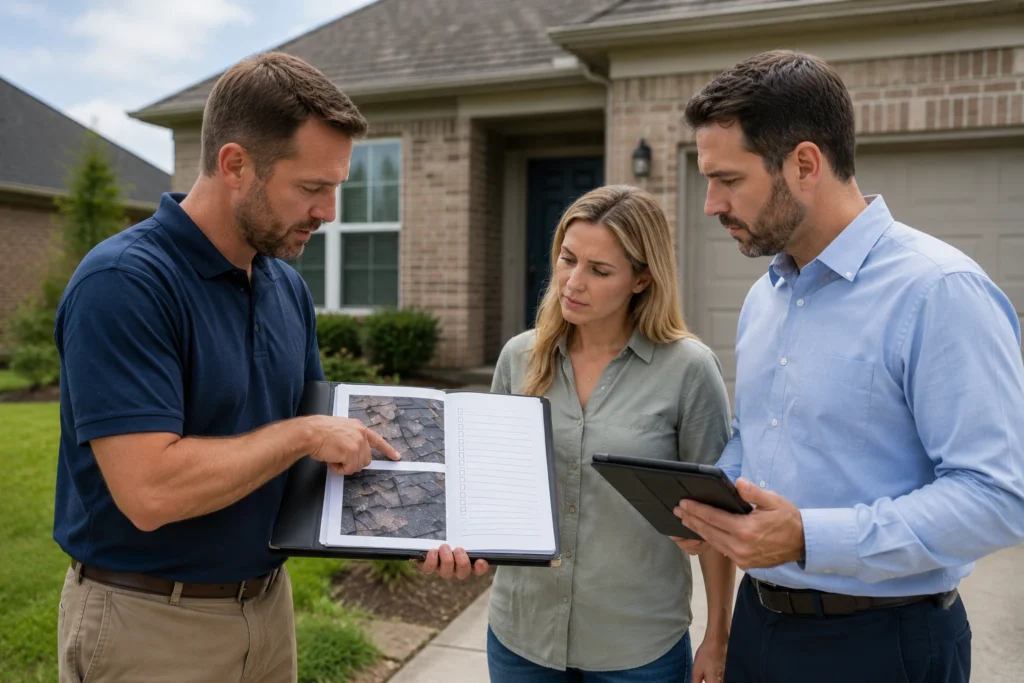
A successful insurance payout often depends on one thing more than homeowners realize: documentation. If you are researching How to Document Hail Damage for an Insurance Claim before hiring a contractor or public adjuster, you are already ahead of most property owners. That matters. Insurance companies pay claims based on evidence, not assumptions. The better your documentation is, the stronger your position becomes during the claims process. And after a major Texas storm, details disappear fast.
Granules wash away. Water stains spread. Temporary repairs hide damage. Roofers knock doors. Adjusters rush inspections because hundreds of claims are flooding in at once. It becomes chaotic quickly. That is why documenting hail damage correctly from the very beginning can dramatically affect your final settlement. In growing communities like Leander, where residential development continues expanding rapidly, hailstorms can create widespread roofing and exterior damage within minutes. Homeowners who understand the documentation process early often avoid the frustration of incomplete payouts, delayed repairs, and denied supplemental damage later.
This guide breaks down the entire process step-by-step. No fluff. No vague advice. Just actionable strategies homeowners can use to properly document storm damage and protect their insurance claim. Why Documentation Matters So Much in Hail Claims
Insurance adjusters are trained to evaluate proof.
That proof includes:
- Photos
- Videos
- Measurements
- Weather data
- Contractor reports
- Repair estimates
- Inspection notes
Without evidence, even legitimate damage may get excluded from the scope of loss. Many homeowners assume the insurance company will “find everything.” Sometimes they do. Sometimes they don’t. High-volume storm seasons often create rushed inspections, especially in hail-prone Texas regions.
A missed roofing slope or overlooked collateral damage can reduce thousands of dollars from a claim. That is not exaggeration. The reality is simple: well-documented claims are harder to underpay.
Understanding How Hail Damage Claims Actually Work
Before documenting anything, it helps to understand the insurance process itself.
Here is the basic flow:
| Step | What Happens |
| Storm Occurs | Hail impacts roofing and exterior surfaces |
| Damage Inspection | Homeowner or contractor identifies potential damage |
| Claim Filed | Insurance carrier opens claim |
| Adjuster Inspection | Carrier evaluates damage |
| Scope & Estimate | Insurance creates repair estimate |
| Negotiation/Supplements | Missing items may be disputed |
| Repairs Completed | Contractor performs work |
| Final Payment Issued | Recoverable depreciation may be released |
Every stage relies on documentation. That means homeowners who prepare properly from Day 1 usually have smoother claim experiences.
Safety Comes First Before Any Inspection
I always tell homeowners this first: do not climb onto a storm-damaged roof immediately after hail. Seriously. Wet surfaces, hidden punctures, unstable decking, and electrical hazards create real risks.
Before documenting anything:
- Wait until weather conditions fully clear
- Inspect from the ground first
- Look for fallen power lines
- Avoid walking on steep roofing systems
- Use binoculars if necessary
Some warning signs require immediate professional help:
- Active ceiling leaks
- Sagging rooflines
- Structural cracking
- Large tree impacts
- Exposed electrical systems
No insurance claim is worth a serious injury.
Start With Storm Information Immediately
One of the biggest mistakes homeowners make is waiting too long. Document storm details as soon as possible.
Record:
- Date of storm
- Approximate time
- Hail size
- Wind conditions
- Rain intensity
- Duration of storm
This information strengthens claim timelines later. For example, if hailstones measured golf-ball size in your area, that supports the likelihood of functional roofing damage.
Save:
- Local weather screenshots
- Radar images
- Weather alerts
- News coverage
- Storm reports
These details become surprisingly valuable during disputes.
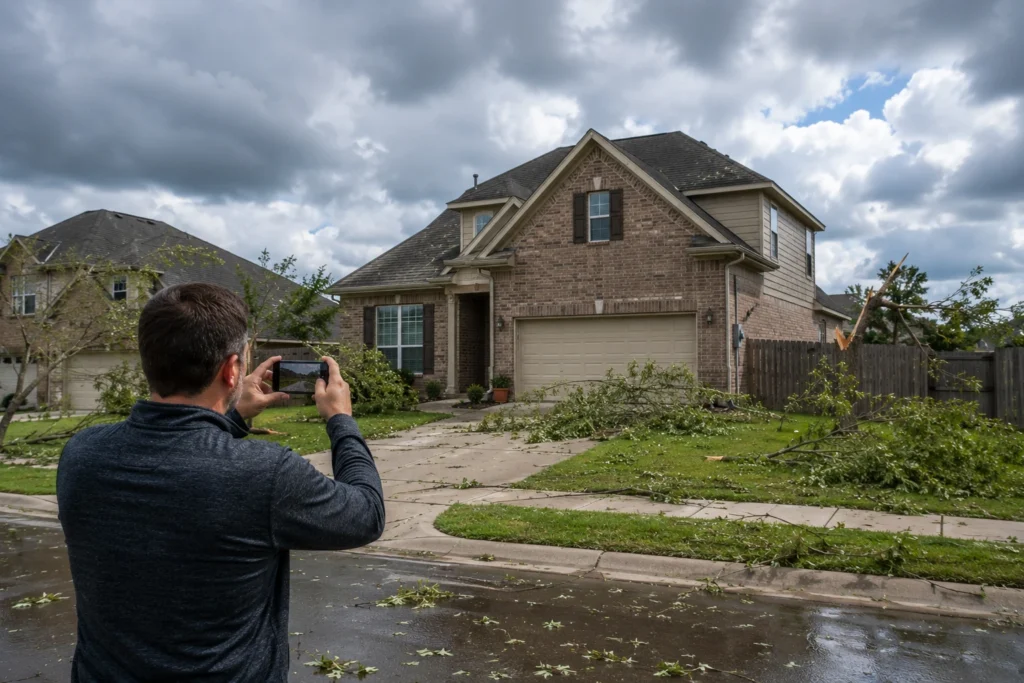
Take Wide-Angle Property Photos First
When documenting hail damage, start broad. Do not jump immediately into close-up roof photos. Insurance carriers want context.
Photograph:
- Entire front elevation
- Rear elevation
- Side elevations
- Detached garages
- Fences
- Sheds
- Outdoor structures
Take photos from multiple angles.
Capture surrounding storm conditions too if visible:
- Broken tree limbs
- Debris
- Damaged neighboring homes
- Street flooding
This establishes overall storm severity. In Leander neighborhoods with closely packed roofing systems, nearby visible damage can help support your claim narrative as well.
Move Into Mid-Range Damage Photos
After wide-angle shots, begin documenting affected areas more closely. This stage connects the overall property condition to specific damage zones.
Examples include:
- Roof sections with visible granule loss
- Denting on gutters
- Damaged siding panels
- Impact marks on garage doors
- Torn window screens
Take multiple photos from different distances. Why? Because adjusters reviewing claims later may not understand exactly where a close-up photo was taken unless you provide visual context.
Think of your documentation like storytelling. Every image should connect logically to the next.
Close-Up Photos Are Critical
Now comes the detailed evidence. This is where many strong claims are won. Common hail damage indicators include:
Asphalt Shingle Damage
- Bruising
- Granule displacement
- Exposed matting
- Circular impact marks
- Fracturing
Metal Components
- Dents
- Paint chipping
- Impact dimples
- Deformed flashing
Tile Roofing
- Cracks
- Edge fractures
- Broken corners
Soft Metals
Soft metals often reveal hail impacts clearly.
Photograph:
- Gutters
- Downspouts
- Roof vents
- Flashing
- Window wraps
These areas help confirm hail direction and severity. Use good lighting whenever possible. Morning or late afternoon lighting often reveals damage more clearly than harsh midday sun.
Do Not Ignore Collateral Damage
This is huge. Insurance companies frequently use collateral damage as supporting evidence for roof replacement approval.
Photograph:
- Mailboxes
- Fencing
- AC condenser fins
- Deck furniture
- Exterior lighting
- Patio covers
- Window screens
- Garage doors
Collateral impacts help establish storm intensity. For example, heavily dented gutters combined with bruised shingles create a much stronger claim presentation than roofing photos alone. The more connected evidence you provide, the harder it becomes to dismiss damage as normal wear and tear.
Use Chalk Carefully During Roof Inspections
Roof inspectors often mark hail hits using chalk. This helps photographs show impacts more clearly. But there is a right way to do it.
Good practice:
- Circle impacts lightly
- Use contrasting chalk colors
- Photograph both marked and unmarked areas
Bad practice:
- Overmarking entire shingles
- Creating confusing patterns
- Misidentifying blistering as hail damage
Poor chalking can actually weaken credibility. Documentation should feel organized and professional, not exaggerated.
Video Walkthroughs Add Powerful Evidence
Photos are essential. Videos add another layer. Walk through the property slowly while narrating visible damage.
Mention:
- Date
- Location
- Areas affected
- Visible impacts
- Interior leaks
Video creates continuity.
It also helps preserve conditions before temporary repairs occur. I strongly recommend homeowners document interior damage on video as well, especially when leaks are active.
Interior Damage Matters More Than Most Homeowners Think
Roof damage is only part of the claim. Water intrusion often creates secondary interior losses that increase repair scope significantly.
Document:
Ceiling Damage
- Water stains
- Bubbling paint
- Sagging drywall
- Cracks
Attic Damage
- Wet insulation
- Mold growth
- Damp decking
- Water trails
Flooring and Wall Damage
- Warped flooring
- Swollen baseboards
- Carpet saturation
- Drywall softening
Take measurements when possible. A tape measure in photos helps establish scale.
Create an Organized Digital Claim Folder
Organization matters. A messy collection of random photos makes claim review harder for everyone involved.
Create folders such as:
| Folder Name | Contents |
| Roof Damage | Roofing photos/videos |
| Interior Damage | Leak photos and videos |
| Weather Reports | Radar images and alerts |
| Insurance Documents | Claim paperwork |
| Contractor Reports | Inspection summaries |
| Receipts | Emergency repairs |
Rename files clearly.
Example:
- “NorthSlope_HailImpact_1”
- “GarageDoor_Dent_Closeup”
- “LivingRoom_CeilingLeak”
Simple organization can dramatically improve claim efficiency later.
Save Every Storm-Related Receipt
Even small expenses matter.
Keep records for:
- Tarp installation
- Emergency drying
- Temporary repairs
- Hotel stays if displacement occurs
- Water mitigation
- Debris removal
Insurance policies often reimburse reasonable mitigation costs. Without receipts, reimbursement becomes harder.
Build a Timeline of the Entire Claim
This becomes valuable fast.
Track:
- Storm date
- Initial inspection
- Claim filing date
- Adjuster visit
- Contractor meetings
- Estimate revisions
- Supplemental requests
A timeline helps identify delays and protects against communication confusion. Especially during major Texas hail seasons.
What Insurance Adjusters Commonly Miss
Not every adjuster misses damage. Many are highly skilled. But rushed inspections happen. Commonly overlooked items include:
Roofing Accessories
- Ridge caps
- Starter shingles
- Flashing
- Pipe boots
- Ventilation components
Hidden Water Intrusion
Leaks may appear days or weeks later.
Steep or High Slopes
Some slopes receive less inspection attention due to accessibility.
Soft Metal Indicators
Sometimes adjusters focus heavily on shingles while overlooking strong collateral evidence. This is why independent documentation matters so much.
Functional Damage vs Cosmetic Damage
This issue causes major disputes. Insurance carriers may classify some impacts as “cosmetic only.” Homeowners need to understand the distinction.
Cosmetic Damage
- Appearance altered
- Function not impaired
Functional Damage
- Water shedding compromised
- Material integrity weakened
- Lifespan reduced
The classification affects payout eligibility significantly. Proper documentation helps demonstrate when impacts affect roof performance, not just appearance.
Why Matching Issues Become Important
Partial repairs are not always simple. Many roofing products become discontinued or fade over time. This creates matching concerns. If replacement shingles cannot reasonably match existing roofing materials, broader replacement discussions may arise depending on policy language and local requirements.
Photograph:
- Overall roof coloration
- Existing weathering
- Multiple roof elevations
Consistency documentation becomes important during repairability discussions.
Understanding Supplement Claims
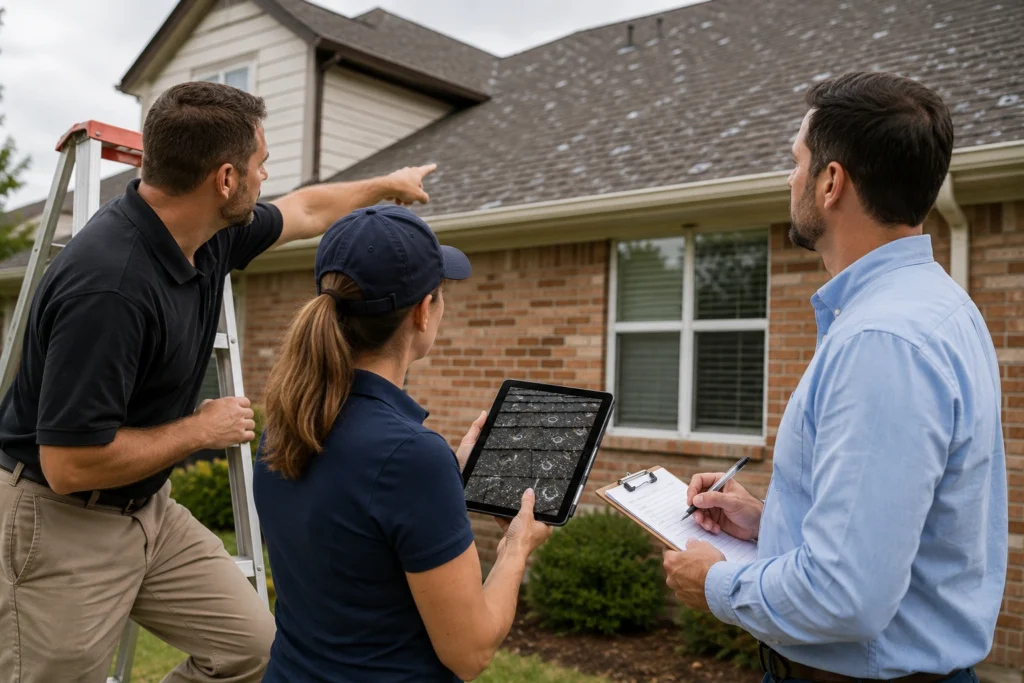
Initial insurance estimates are not always final. Supplements are common in hail claims.
A supplement requests additional payment for:
- Missed damage
- Code upgrades
- Additional labor
- Material changes
- Hidden conditions
Well-documented supplements often succeed because evidence supports the request clearly. Poorly documented supplements struggle.
Should You Hire a Public Adjuster?
Sometimes yes. Sometimes no. It depends on claim complexity. A public adjuster represents the policyholder, not the insurance company.
They typically assist with:
- Damage documentation
- Policy interpretation
- Estimate review
- Negotiation
- Supplemental claims
Homeowners often begin researching How to Document Hail Damage for an Insurance Claim before deciding whether professional representation is necessary. That is smart. Understanding the process first helps you make informed decisions rather than emotional ones immediately after a storm.
Questions to Ask Before Hiring Anyone
Whether hiring a roofer or public adjuster, ask detailed questions.
Examples include:
| Question | Why It Matters |
| Are you licensed? | Protects homeowners |
| Do you specialize in hail claims? | Experience matters |
| How do you document damage? | Process quality |
| Do you use Xactimate? | Industry estimating standard |
| Will you assist with supplements? | Long-term claim support |
Avoid pressure tactics. Storm environments create urgency, but rushed decisions often create bigger problems later.
Common Documentation Mistakes Homeowners Make
Mistakes happen constantly after storms. Here are the biggest ones.
Waiting Too Long
Damage conditions change quickly.
Throwing Away Damaged Materials
Keep damaged vents, shingles, or components when possible.
Taking Too Few Photos
More evidence is better than less.
Ignoring Interior Damage
Water intrusion often expands over time.
Trusting Memory Instead of Records
Always document conversations and dates.
Accepting the First Estimate Immediately
Independent review is often worthwhile.
Weather Data Can Strengthen Your Claim
Weather verification tools have become extremely valuable.
Useful resources include:
- NOAA storm data
- Local radar archives
- Hail tracking maps
- Weather station reports
These reports help establish:
- Storm severity
- Hail size
- Wind direction
- Timing
Pairing weather data with property photos creates a much stronger evidence package.
.
Understanding Roofing Scope Sheets
Insurance estimates include detailed scope sheets.
These documents outline:
- Quantities
- Measurements
- Labor items
- Material costs
- Repair methods
Review them carefully.
Look for:
- Missing accessories
- Incomplete tear-off items
- Insufficient starter materials
- Ventilation omissions
- Incorrect waste calculations
Details matter here. A small omission repeated across an entire roofing system can significantly affect final payouts.
Why Xactimate Matters in Hail Claims
Xactimate is the most widely used estimating software in the property insurance industry.
It standardizes:
- Labor pricing
- Material costs
- Regional pricing structures
Understanding Xactimate helps homeowners interpret estimates more accurately.
For example, labor rates in rapidly growing Texas communities like Leander may shift due to post-storm contractor demand and material shortages.
Pricing discussions often become part of supplement negotiations.
Preparing for the Insurance Inspection
Preparation improves outcomes.
Before the adjuster arrives:
- Organize all photos
- Print contractor reports
- Create a damage checklist
- Prepare questions
Be present if possible.
Walk the property with the adjuster.
Point out:
- Interior leaks
- Collateral damage
- Problematic roof slopes
- Previous temporary repairs
Professional communication matters. Aggressive confrontations rarely help. Clear documentation does.
Hail Claims in Texas Require Extra Attention
Texas consistently experiences some of the highest hail claim volumes in the country.
That creates pressure on:
- Insurance carriers
- Roofing contractors
- Material suppliers
- Adjusters
During large storm seasons, inspections sometimes become rushed simply because claim volume explodes. Homeowners who understand How to Document Hail Damage for an Insurance Claim before filing often navigate the process more effectively. Preparation creates leverage. And in storm-prone areas like Leander, quick action after a hailstorm can preserve evidence before conditions deteriorate further.
How Contractors and Public Adjusters Document Damage Differently
Many homeowners assume every inspection process looks the same. It does not. Roofing contractors, insurance adjusters, and public adjusters often approach hail inspections from different perspectives.
A roofing contractor may focus heavily on repair requirements and installation concerns. An insurance adjuster evaluates policy-covered damage and cost control. A public adjuster typically concentrates on maximizing claim accuracy by documenting every affected component in detail. That difference matters because documentation styles can influence claim outcomes.
For example, one inspector may photograph only visible shingle bruising. Another may also document:
- Ventilation impacts
- Flashing deformation
- Soft metal consistency
- Interior moisture migration
- Code-related repair requirements
- Underlayment exposure risks
The more complete the documentation package becomes, the stronger the overall claim presentation usually is. Homeowners researching How to Document Hail Damage for an Insurance Claim before hiring help should pay close attention to the inspection process itself, not just the estimate total.
Ask professionals:
- How many photos do you typically take?
- Do you inspect attic spaces?
- Will collateral damage be documented?
- Do you create written inspection reports?
- Are moisture readings included if leaks exist?
A thorough inspection often tells you a lot about the quality of claim support you may receive later.
Why Timing Can Affect Insurance Claim Outcomes
Timing matters more than most homeowners realize. Delays can create problems quickly after hailstorms. Granule loss may worsen from rain exposure. Temporary repairs can hide impact areas. Interior moisture can spread into insulation and wall cavities. Even landscaping cleanup can remove collateral evidence that once supported storm severity. That is why immediate documentation is so valuable.
Ideally, homeowners should begin documenting:
- Exterior conditions
- Interior leaks
- Storm debris
- Weather details
Within the first 24 to 72 hours after the storm whenever safely possible. This does not mean filing a rushed claim blindly. It means preserving evidence while conditions are fresh. In Texas, large hail events often trigger waves of inspections across entire cities simultaneously. Contractors become booked quickly. Insurance adjusters face overloaded schedules. Material shortages sometimes follow major regional storms.
Homeowners in Leander who document early often place themselves in a far better position than those who wait several weeks before taking action. Evidence fades. Documentation preserves it.
How to Protect Yourself From Incomplete or Low Estimates

One of the most frustrating moments in a hail claim happens when homeowners compare insurance estimates against actual contractor pricing. Sometimes the numbers align fairly well. Sometimes they do not.
Large differences can occur because:
- Damage was missed
- Roofing accessories were excluded
- Labor pricing changed
- Code items were omitted
- Measurements differed
- Interior repairs were underestimated
This is why estimate review is critical. Do not focus only on the final dollar amount. Review line items carefully.
Look for:
- Ridge cap replacement
- Starter row materials
- Drip edge
- Ice and water shield requirements
- Flashing replacement
- Steep-charge labor
- High-wall charges
- Disposal costs
Missing line items can add up fast. A homeowner researching How to Document Hail Damage for an Insurance Claim should also understand that documentation and estimating work together. Strong documentation supports stronger estimate revisions when missing damage is discovered later. Good evidence creates negotiating power. And that becomes extremely important during supplemental claim discussions.
Advanced Documentation Can Strengthen Complex Claims
One important thing homeowners often overlook during a Hail Damage Roof Insurance Claim is how technical documentation can become during disputes over repair scope and material performance. Some inspections even involve advanced analytical methods similar to concepts found in Topological Data Analysis, where patterns and structural relationships are evaluated in highly detailed ways. While roofing claims are far more practical in nature, the principle remains the same: stronger data and clearer documentation usually produce stronger conclusions.
This becomes especially important when:
- Multiple roofing systems are involved
- Prior repairs exist
- Storm dates are disputed
- Interior leaks appear later
- Matching issues become contested
- Supplemental claims continue expanding
Detailed evidence creates consistency throughout the entire claim lifecycle. And consistency builds credibility.
Long-Term Recordkeeping Is Extremely Important
Even after repairs finish, keep everything.
Store:
- Final invoices
- Warranty documents
- Completion certificates
- Before-and-after photos
- Insurance correspondence
Future storms happen. Organized records help support later claims and property resale documentation. Cloud backups work well for long-term storage.
Final Thoughts
Learning How to Document Hail Damage for an Insurance Claim is one of the smartest things a homeowner can do before hiring contractors, filing paperwork, or negotiating repairs. Documentation drives outcomes. Not assumptions. Not opinions. Evidence. The homeowners who photograph thoroughly, organize records carefully, track storm details, and understand the insurance process usually place themselves in far stronger positions during claim negotiations. That does not mean every claim becomes easy. Hail claims can still become complicated, especially during high-volume storm seasons across Texas. But preparation changes everything.
In communities like Leander, where severe weather can impact entire neighborhoods within minutes, homeowners who act quickly and document carefully often avoid the most frustrating claim disputes later. Take photos early. Save records. Organize everything. Ask questions. Understand your policy. Most importantly, treat your documentation like evidence from the very beginning because that is exactly what it becomes once the insurance claim process starts.
FAQs
You should document hail damage as soon as it is safe to do so. Early documentation helps preserve evidence before conditions change.
Wide-angle property photos, close-up roof impacts, soft metal damage, and interior leak photos are all important for supporting a claim.
Yes. Water intrusion, ceiling stains, and hidden roofing issues may become visible days or even weeks later.
Only if it is safe and you are experienced. Many homeowners choose professional inspections to avoid injury risks.
Weather reports help verify storm timing, hail size, and severity in your specific area.
Collateral damage refers to impacts on gutters, fences, garage doors, window screens, and other exterior components that support storm evidence.
In some cases, yes. Supplemental claims may allow additional damage documentation after the original inspection.
A public adjuster documents damage, reviews policy coverage, and negotiates with the insurance company on behalf of the homeowner.
Initial estimates sometimes miss roofing accessories, code items, or hidden damage that becomes visible during repairs.
Keep all claim documents, photos, and repair invoices permanently if possible for future insurance and resale purposes.