
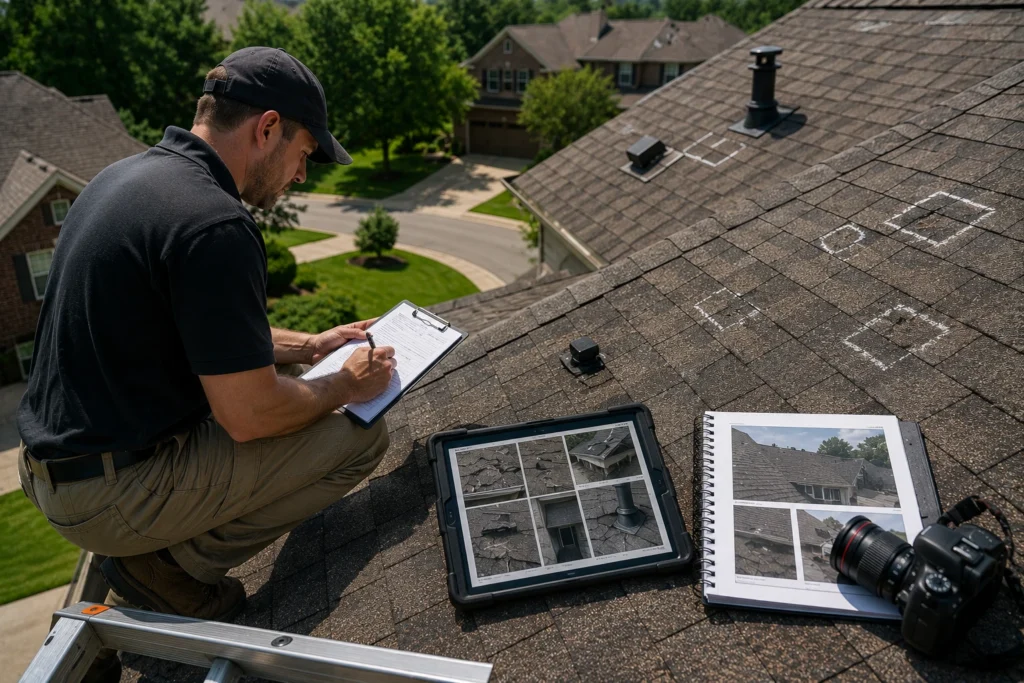
A denied roof claim can feel overwhelming. One day you are cleaning up after a hailstorm, checking gutters and picking shingles out of the yard, and the next you are staring at a denial letter explaining why the insurance company will not pay for repairs. For homeowners searching for answers about What to Do If Your Hail Claim Was Denied in Leander, TX, the frustration is not only financial. It becomes emotional fast. You paid premiums for years.
You reported the storm damage. You expected help. Then the carrier denied the claim. That situation is becoming increasingly common across Texas. After major storms, insurance companies process huge volumes of claims quickly. Some inspections are thorough. Others are rushed. Some adjusters carefully document every roof slope and collateral impact. Others spend only a short time on-site before issuing conclusions that may not fully reflect the actual condition of the property.
That is why a denial does not always mean the process is over. In many disputed claims, additional inspections, stronger documentation, supplements, or professional representation later uncover damage that was originally overlooked or undervalued. Homeowners who stay organized and respond strategically often place themselves in a much stronger position. This guide breaks down exactly what homeowners should understand about What to Do If Your Hail Claim Was Denied in Leander, TX, including why denials happen, how to respond properly, what mistakes to avoid, and how to strengthen a disputed claim moving forward.
Why Hail Claims Get Denied in Texas
Insurance companies rarely deny claims without explanation. The denial usually references inspection findings, policy language, or exclusions. Still, many homeowners are surprised by the reasoning.
Common denial explanations include:
- Wear and tear
- Aging materials
- Installation defects
- Cosmetic damage only
- No storm-created opening
- Lack of supporting evidence
- Damage predating the storm
- Reporting delays
These explanations may sound definitive at first. But in many roof hail claim dispute Texas situations, the issue is not whether damage exists. The real issue is whether the inspection properly documented it. That distinction matters.
Hail damage can sometimes be subtle, especially on older roofing systems or architectural shingles. Granule loss may blend into natural weathering. Soft metal impacts may be overlooked. Certain slopes may show stronger storm direction impacts than others. If the inspection misses those indicators, the denial may rely on incomplete information.
Why Roof Damage Frequently Gets Overlooked
Not all hail damage is dramatic. Many homeowners expect to see obvious holes or shattered shingles after a storm, but that is not always how hail damage appears. In reality, many roofing systems suffer functional damage that requires close inspection to identify properly. This becomes especially important in denied hail insurance claim in Leander TX cases.
Some commonly overlooked damage indicators include:
- Bruised shingles
- Granule displacement
- Fractured matting
- Cracked seal strips
- Denting on vents and flashing
- Soft metal impacts
- HVAC fin damage
- Window screen punctures
Roof complexity also affects inspections. Steep roofs, multi-story homes, and properties with multiple elevations can be difficult to inspect thoroughly. If an adjuster spends limited time on the property, important evidence may never make it into the report. That happens more often than homeowners realize.
Read the Denial Letter Carefully
The denial letter is not just paperwork. It is the roadmap for the dispute. Do not skim through it quickly and toss it aside. Read every line carefully.
Pay close attention to:
- Policy language cited
- Specific causes of denial
- Dates mentioned
- Inspection conclusions
- Exclusions referenced
- Requests for additional information
Some denial letters contain vague wording that deserves closer review.
Statements like:
- “Damage consistent with wear and tear”
- “No functional hail damage observed”
- “Condition unrelated to reported storm”
may sound firm, but they are still opinions based on the inspection findings. If the inspection itself was incomplete, the denial may be challengeable. Highlight anything that seems unclear, unsupported, or inconsistent with what you observed personally after the storm.
Request the Full Claim File

This step is extremely important after an insurance denied roof replacement claim. Many homeowners never request the full claim file, yet the documents inside often reveal major gaps in the investigation.
The claim file may include:
- Adjuster notes
- Inspection photographs
- Roof diagrams
- Internal emails
- Engineering reports
- Measurement reports
- Weather analysis
- Communication history
Once you review the file, you may discover:
- Certain roof slopes were barely photographed
- Collateral damage was ignored
- Interior damage was omitted
- Soft metal impacts were documented but dismissed
- Important roofing components were not evaluated
That information can become valuable later during negotiations or reinspections. Request the file in writing and keep organized copies of everything you receive.
Document the Property Again Immediately
Never rely only on the carrier’s documentation. Create your own. Start with wide-angle photos showing the entire property from multiple directions. Then move into close-up photographs of specific damage areas.
Document:
- Roof slopes
- Gutters
- Downspouts
- Garage doors
- Window screens
- HVAC systems
- Siding
- Fence staining
- Patio covers
- Detached structures
Take photos during good lighting whenever possible. The goal is not simply to take random pictures. The goal is to create a clear visual timeline showing the condition of the property after the storm. Organization matters here. Store photos in labeled folders with dates and descriptions. That makes future discussions much easier.
Gather Independent Storm Evidence
Strong storm evidence helps support a disputed hail damage insurance claim. Do not rely only on the insurance company’s weather analysis.
Gather:
- Hail maps
- National weather data
- Local storm reports
- Radar screenshots
- Time-stamped storm photos
- Neighbor repair activity
- Roofing contractor observations
In many Leander neighborhoods, multiple homes are affected during the same storm event. If nearby properties received full roof replacements while your claim was denied, that pattern may raise important questions. Document nearby repairs when possible. That type of evidence sometimes becomes very useful later.
Why Independent Roof Inspections Matter
Independent inspections often reveal issues the original inspection missed. That is why many homeowners request another evaluation after a denial.
A detailed roof inspection should include:
- Test square analysis
- Shingle condition review
- Soft metal inspection
- Flashing evaluation
- Ridge cap assessment
- Ventilation review
- Underlayment concerns
- Collateral damage documentation
The best inspections also provide organized photo reports showing exact damage locations. That level of detail creates credibility. Insurance companies review evidence constantly. The more structured and technical the documentation becomes, the harder it is to dismiss.
Roofing Contractors and Public Adjusters Serve Different Roles
Homeowners often assume roofing contractors and public adjusters perform the same function. They do not. A contractor focuses on construction and repair work. A public adjuster focuses on the insurance claim itself.
Here is a quick comparison:
| Roofing Contractor | Public Adjuster |
| Evaluates roof condition | Evaluates claim handling |
| Provides repair estimate | Negotiates with carrier |
| Performs replacement work | Reviews policy language |
| Identifies roofing damage | Builds documentation strategy |
| Focuses on construction | Focuses on claim resolution |
Both may become important in a hail claim reinspection process Texas dispute.
Understanding the Supplement Process
Supplements are common in hail claims. Very common. A supplement adds missed, underpriced, or overlooked items to the original claim estimate. This happens because initial scopes are often incomplete.
Commonly missed roofing items include:
- Starter shingles
- Ridge cap replacement
- Drip edge
- Flashing replacement
- Ice and water shield
- Ventilation components
- Steep roof labor
- High access charges
- Code-required upgrades
Some initial estimates appear reasonable until contractors begin preparing for actual replacement work. Then missing components start appearing everywhere. That creates major financial gaps. A detailed supplement backed by strong evidence can significantly change claim outcomes.
Why Xactimate Matters in Disputed Claims
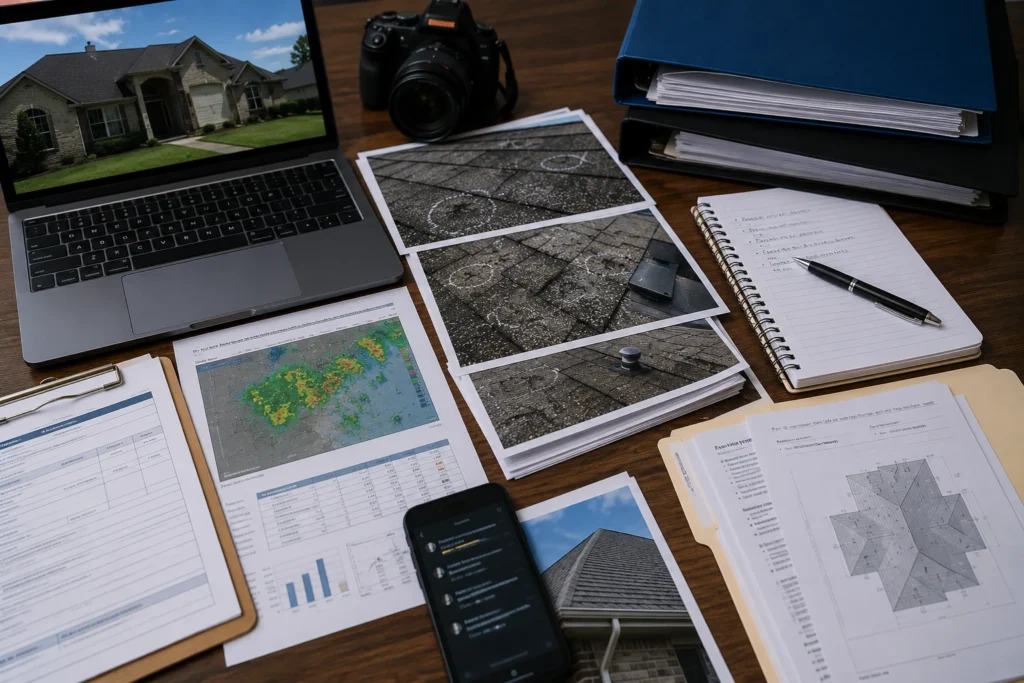
Most major carriers rely on Xactimate estimating software in some form. That matters because many disputes come down to scope accuracy and pricing details.
Strong supplements typically include:
- Line-item pricing
- Accurate measurements
- Material calculations
- Labor requirements
- Regional pricing adjustments
- Code compliance items
When disputes become technical, organized estimates usually carry far more weight than emotional arguments. Facts matter. Documentation matters more.
Texas Insurance Claim Timelines Matter
Texas carriers are expected to follow claim-handling standards involving:
- Claim acknowledgment
- Investigation activity
- Requests for information
- Payment or denial decisions
Delays sometimes happen during busy storm seasons. Large hail events create enormous claim volumes across Central Texas. Still, homeowners should monitor communication carefully.
Watch for:
- Long response gaps
- Repeated adjuster reassignments
- Delayed inspections
- Ignored emails
- Duplicate document requests
- Abrupt changes in conclusions
When communication breaks down consistently, the claim often becomes harder to resolve smoothly.
When Delays Become Warning Signs
Not every delay is improper. Storm volume alone can slow claims significantly.
But certain patterns may signal larger issues:
- Contradictory inspection findings
- Incomplete explanations
- Sudden engineering involvement
- Constant requests for repetitive information
- Lack of transparency
Homeowners dealing with prolonged delays often feel exhausted before repairs even begin. That frustration is understandable. Roof damage affects daily life. Leaks worsen. Interior staining spreads. Property value concerns grow. Families want normalcy restored quickly. The longer disputes drag on, the more stressful they become.
Requesting a Reinspection
A reinspection can become one of the most important steps after a denial.
Especially when:
- New evidence exists
- Additional damage was discovered
- The first inspection appeared rushed
- Roofing professionals disagree with the findings
But preparation matters enormously. Do not walk into a reinspection unprepared.
How to Prepare Properly for a Reinspection
Create an organized evidence package beforehand.
Include:
- Damage photos
- Contractor reports
- Storm documentation
- Previous estimates
- Communication records
- Marked roof diagrams
- Supplement documentation
Walk the property carefully before the reinspection occurs.
Identify:
- Soft metal impacts
- Damaged shingles
- Interior leaks
- Fence staining
- Window screen punctures
- HVAC damage
Preparation changes the tone of the meeting immediately.
Professional organization creates credibility.
Strong evidence often determines whether a denied claim stays denied or moves toward reconsideration. Homeowners researching How to Document Hail Damage for an Insurance Claim should focus on organized photographs, date-stamped storm records, contractor findings, and detailed repair estimates. Building a complete evidence file creates a much clearer picture of the property condition after severe weather. In some complex disputes, the process can feel almost like studying topological vector space theory highly technical, layered, and difficult to interpret without the right expertise.
Why Representation During Reinspections Helps
Reinspections often become highly technical.
Having experienced representation present may help clarify:
- Scope disagreements
- Roofing system requirements
- Missing line items
- Measurement issues
- Code concerns
More importantly, it ensures important damage indicators are discussed in real time instead of being overlooked again. Calm, professional communication usually creates stronger results than confrontation. That matters during disputed claims.
Understanding the Appraisal Clause
Many Texas homeowners do not realize their policy may contain an appraisal clause. This clause can become useful during a disputed hail damage insurance claim.
The appraisal process generally involves:
- The homeowner selecting an appraiser
- The carrier selecting an appraiser
- An umpire resolving disagreements if needed
Appraisal often works best for:
- Scope disputes
- Pricing disagreements
- Partial denials
- Underpayment issues
It may not fully resolve pure coverage disputes involving policy interpretation, but it can still move stalled claims forward in certain situations.
When Appraisal Makes Sense
Appraisal may help if:
- Damage was acknowledged but undervalued
- Repair pricing was disputed
- Scope omissions exist
- Partial payment occurred
It may not solve:
- Fraud allegations
- Coverage exclusions
- Policy interpretation conflicts
Still, appraisal sometimes becomes faster and more efficient than prolonged negotiations.
Hiring a Public Adjuster in Leander
Not every denied claim requires representation. But some absolutely benefit from it.
A public adjuster for denied hail claim situations typically helps by:
- Reviewing the policy
- Documenting damages
- Preparing supplements
- Negotiating with carriers
- Managing communication
- Organizing evidence
That support can reduce stress dramatically for homeowners already dealing with repairs, family obligations, and financial uncertainty.
Questions to Ask Before Hiring Representation
Do not hire anyone impulsively after a denial. Ask important questions first.
Including:
- How much hail claim experience do they have?
- Do they understand Texas insurance practices?
- How do they document claims?
- What is their communication process?
- How are fees structured?
- Do they understand Xactimate estimating?
Experience matters. Organization matters more.
Common Mistakes Homeowners Make After Denials
Some of the biggest claim problems happen after the denial arrives. People panic. Or they wait too long. Avoid these common mistakes.
Waiting Too Long to Respond
Deadlines matter. Delays can weaken evidence and complicate future inspections, especially if additional storms occur later.
Throwing Away Damaged Materials
Preserve shingles, vents, flashing, and other materials whenever possible. Physical evidence may later support the dispute.
Paying for Full Repairs Too Early
Emergency mitigation is important. But fully replacing roofing systems before documentation is complete can create additional challenges. Document everything thoroughly first.
Depending Only on the Carrier’s Findings
Independent verification matters. Especially in denied hail insurance claim in Leander TX situations involving inconsistent or incomplete inspections.
Why Leander Homeowners Face Unique Challenges
Leander continues growing rapidly.
That growth creates:
- More residential developments
- Higher claim volume after storms
- More roofing variation
- Faster inspection cycles
During busy hail seasons, carriers process enormous numbers of claims quickly. Speed sometimes affects inspection quality. That is why homeowners should never assume a quick denial automatically means the decision was accurate.
How to Strengthen Future Hail Claims
Texas weather is unpredictable. Strong preparation helps reduce future problems significantly.
Schedule Routine Roof Inspections
Annual inspections create valuable condition history. That becomes important later if carriers argue the damage existed before the storm.
Keep Organized Property Records
Maintain:
- Roof invoices
- Inspection reports
- Repair documentation
- Warranty information
- Maintenance receipts
Good records strengthen credibility.
Understand Your Policy Before Storm Season
Know:
- Deductibles
- Cosmetic exclusions
- Reporting deadlines
- Replacement cost language
- Coverage limitations
Most homeowners never review their policy until damage occurs. That creates confusion later.
What Strong Claim Documentation Looks Like
The strongest claims are not always the loudest. They are usually the most organized.
A strong documentation package often includes:
| Documentation | Purpose |
| Wide-angle photos | Establishes overall context |
| Close-up damage images | Shows specific impacts |
| Weather reports | Confirms storm activity |
| Contractor findings | Provides technical support |
| Repair estimates | Establishes financial scope |
| Communication logs | Tracks claim handling |
| Supplement documents | Identifies omissions |
Insurance companies evaluate evidence every day. Organized documentation changes leverage.
Emotional Decisions Hurt Claims
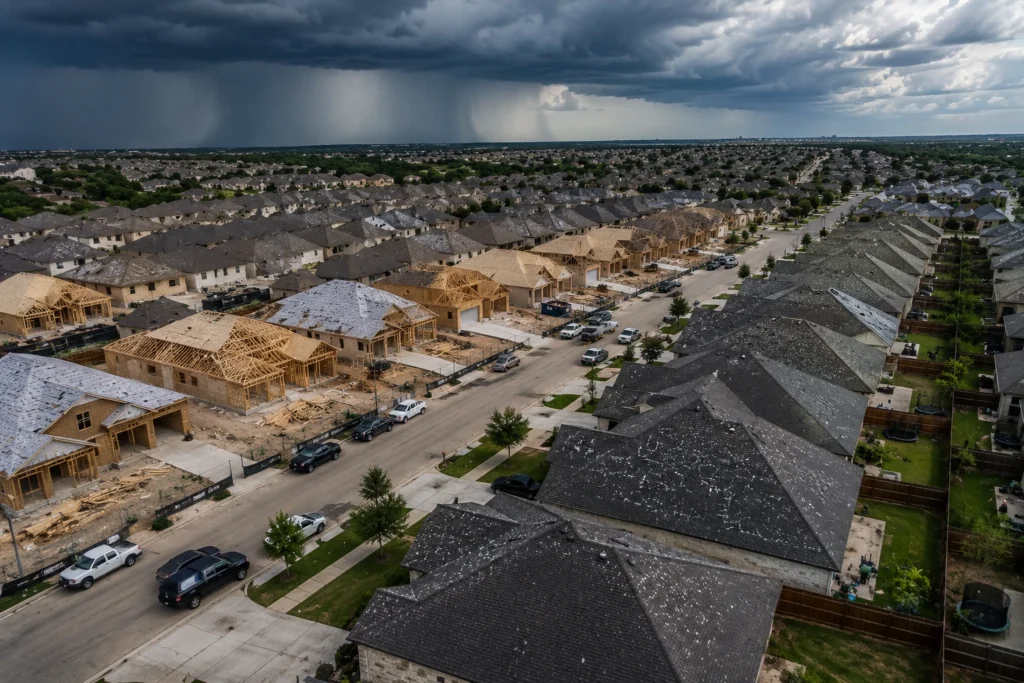
Denied claims create frustration quickly. That is understandable. Roof damage disrupts routines, creates financial pressure, and leaves homeowners feeling uncertain about what happens next. But emotional reactions rarely improve claim outcomes. Professional communication matters. Clear documentation matters more.
The homeowners who often achieve stronger outcomes are the ones who:
- Stay organized
- Preserve evidence
- Track communication carefully
- Request independent evaluations
- Respond quickly
- Build detailed documentation
Consistency matters throughout the process.
Final Thoughts on What to Do If Your Hail Claim Was Denied in Leander, TX
A denial is not always the final answer. That is the most important thing homeowners should remember when facing What to Do If Your Hail Claim Was Denied in Leander, TX situations. Many disputed claims across Texas eventually move forward after stronger inspections, better evidence, and more detailed documentation are presented.
The key is responding strategically instead of emotionally. Strong photos. Independent evaluations. Organized communication. Detailed supplements. Those elements can completely change the direction of a claim dispute. If your insurance denied roof replacement claim appears inconsistent with visible storm conditions, do not automatically assume the process is over. Review the denial carefully. Preserve evidence. Request the claim file. Gather independent support. Understand your policy and your options. Because in many hail claim disputes, the difference between denial and payment comes down to preparation, persistence, and documentation.
FAQs
Yes. Many denied claims can be reopened if you provide new evidence, updated inspections, or stronger documentation.
The timeline depends on your policy and state laws, so review your insurance documents carefully and act quickly after receiving the denial.
Detailed photos, weather reports, contractor inspections, repair estimates, and collateral damage documentation are often very helpful.
If the claim is large, complicated, or repeatedly delayed, a public adjuster may help organize evidence and negotiate with the carrier.
Yes. Some roofing issues, leaks, and weakened shingles become more noticeable over time after repeated weather exposure.
Carriers sometimes argue the roof was already aging before the storm, especially on older roofing systems.
A supplement adds missing or underpaid repair items to the original estimate after additional damage is discovered.
No. A reinspection simply gives the carrier another opportunity to review the damage with updated evidence.
Request the full claim file, gather independent inspections, document the property thoroughly, and organize all communications.
They can help show storm consistency in the area, especially if neighboring homes experienced similar hail impacts.